This is a space for tracing how global sustainability decisions quietly shape the way we live, work, and move through the world.
Opinions are my own
ESG
-
Sustainability competencies self-assessment
This self-assessment is based on the framework of Wiek, Withycombe and Redman (2011), the foundational reference for sustainability competencies in higher education. You will rate yourself on 20 statements across five competencies. At the end you will see your profile, with suggestions where development would have the most impact.

-
The Levers of Change to 2030: Aligning Impact with Feasibility
A survey of more than 800 sustainability experts highlights which actions can achieve the greatest progress toward 2030 goals. High-impact, high-feasibility initiatives are the immediate priorities, while systemic but harder reforms demand innovation and collaboration to break through barriers.

-
Mapping Ocean Industry Impacts: Where Reporting Falls Short
Ocean industries report extensively on energy use and emissions, yet disclosure on biodiversity, habitat, and ecosystem risks remains limited. This imbalance highlights the need for integrated sustainability frameworks that move beyond carbon metrics and ensure accountability across industries.

-
100 Days In: What Energy Transition Clarified about My ESG Journey
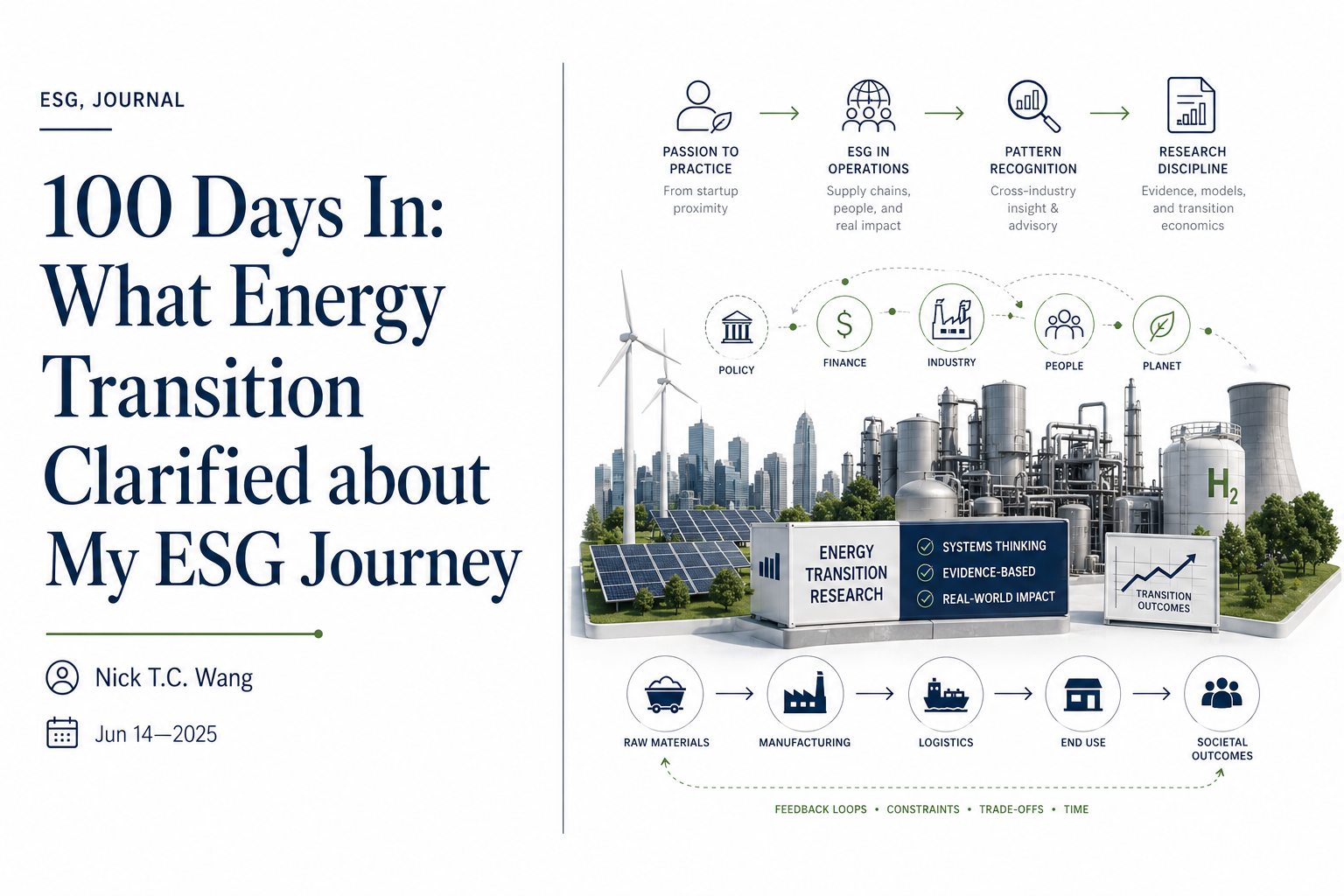
After a hundred days in energy transition research, my career reads less like a series of pivots and more like a widening lens. From startups to seafood supply chains, consulting to markets, sustainability revealed itself as operational work shaped by limits, incentives, and execution, not reporting, rhetoric, or personal conviction.
-
Redefining Sustainability Leverage in the Age of Transition
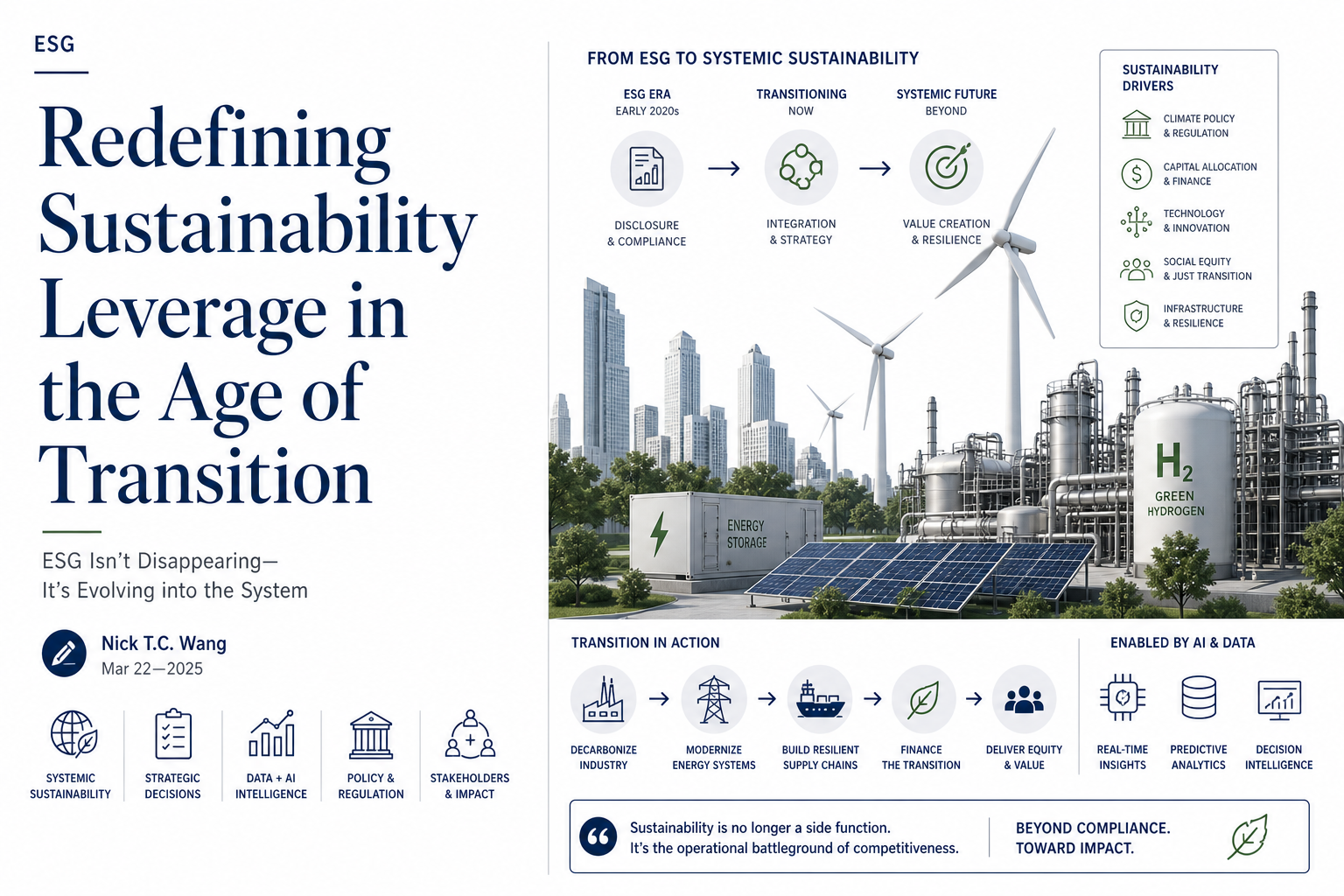
As the ESG label fades from headlines, sustainability strategy is maturing—rooted in real-world economics, regulation, and energy infrastructure. This shift from reputation to performance signals the rise of operationalised sustainability. For practitioners, this is the inflection point we’ve been preparing for.
-
Recalibrating Capital: Financial System and Sustainable Finance
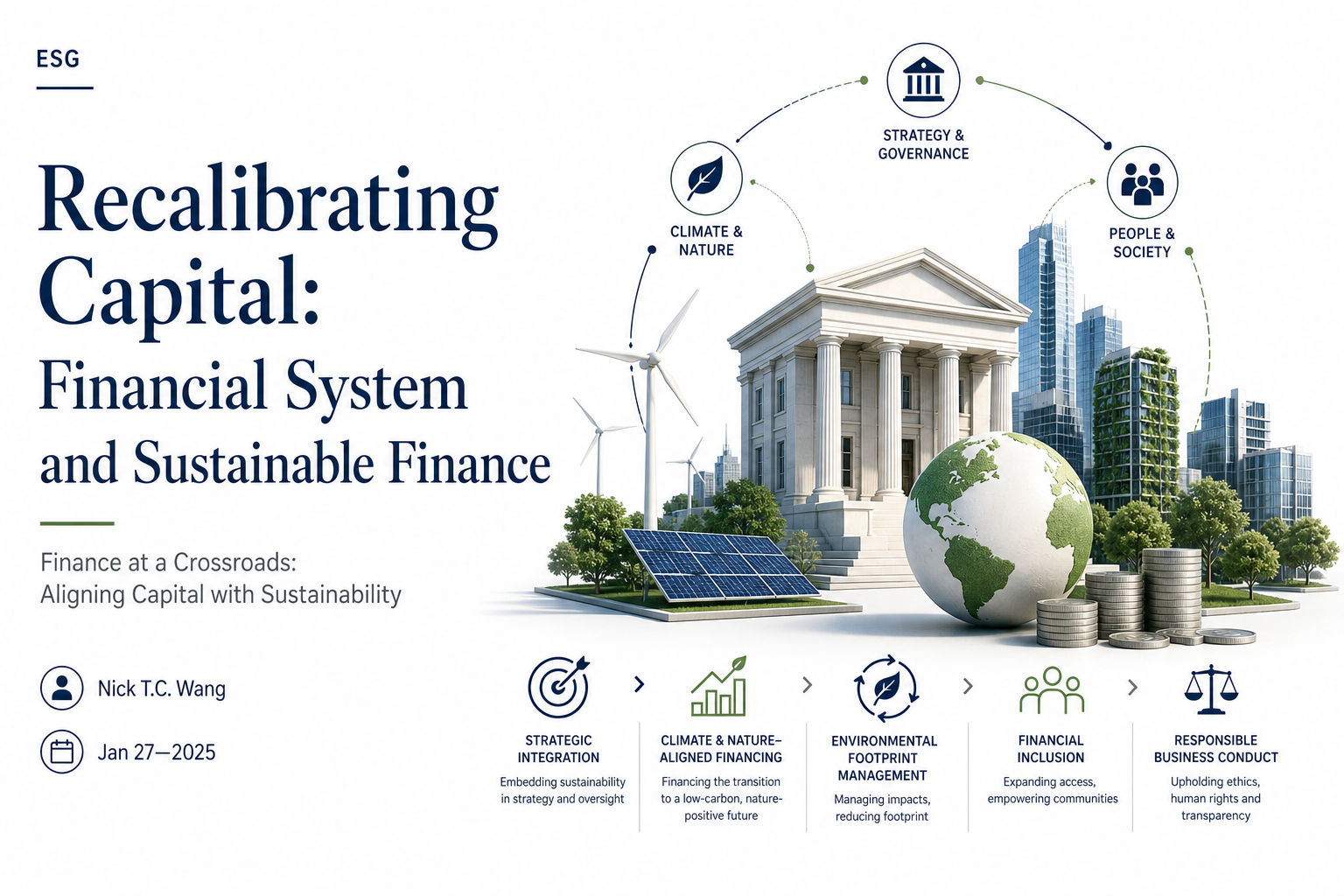
Finance holds the power to accelerate sustainability but remains misaligned with planetary and social boundaries. The Financial System Benchmark provides a roadmap—measuring not just intentions, but impact—urging institutions to lead decisively in building a resilient, just, and low-carbon global economy.
-
Human Rights Due Diligence: A Strategic Imperative for Business
Human Rights Due Diligence (HRDD) helps businesses identify, prevent, and mitigate their human rights impacts. Beyond legal compliance, it signals ethical leadership, protects stakeholder interests, and drives long-term value. In today’s global economy, HRDD is no longer optional, it is a strategic necessity.

-
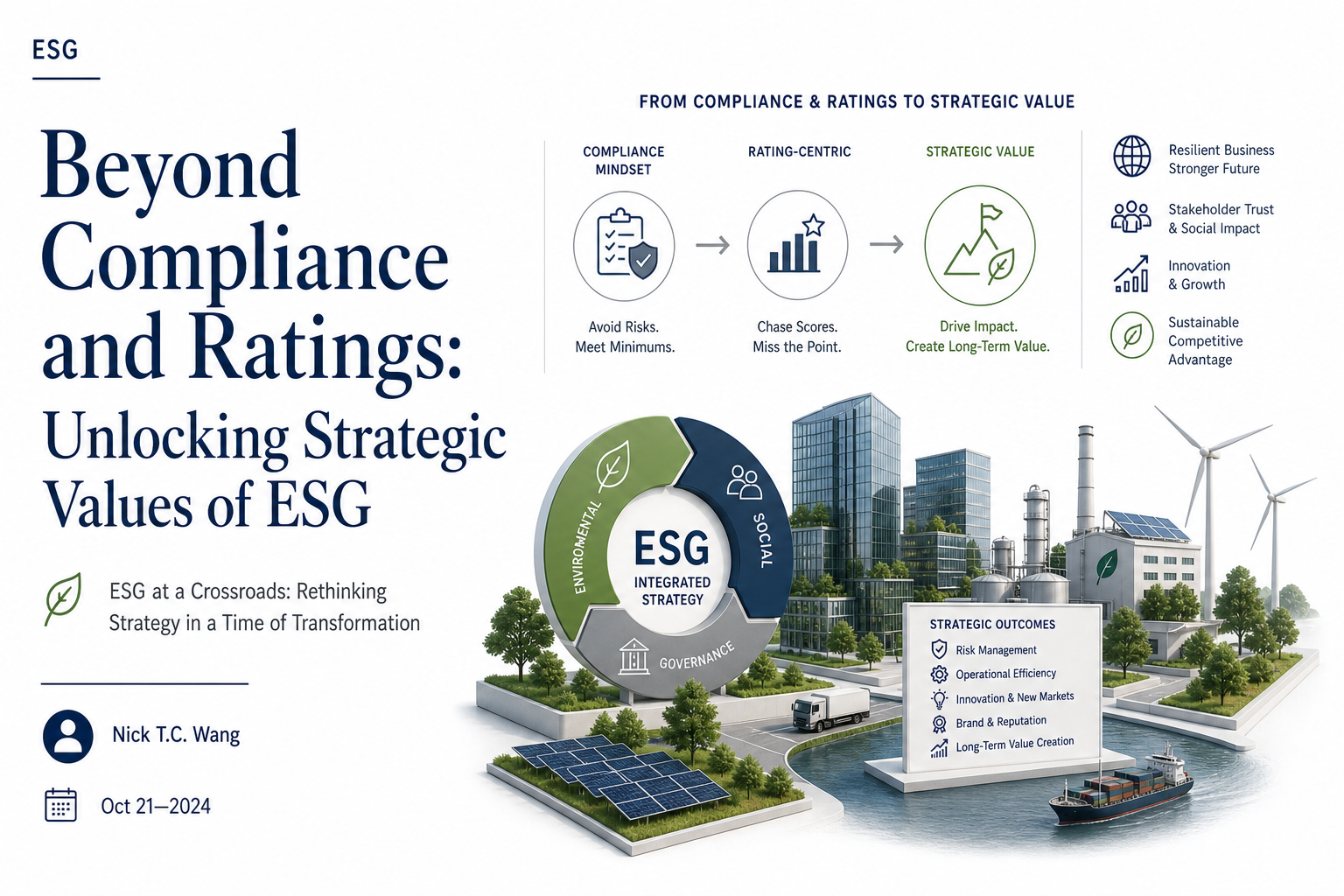
Beyond Compliance and Ratings: Unlocking Strategic Values of ESG
As global expectations evolve, ESG must move beyond compliance checklists and rating-driven vanity. Businesses that integrate sustainability into their core strategy will lead—not follow—in driving innovation, resilience, and long-term value. This article explores how to shift ESG from obligation to opportunity.
-
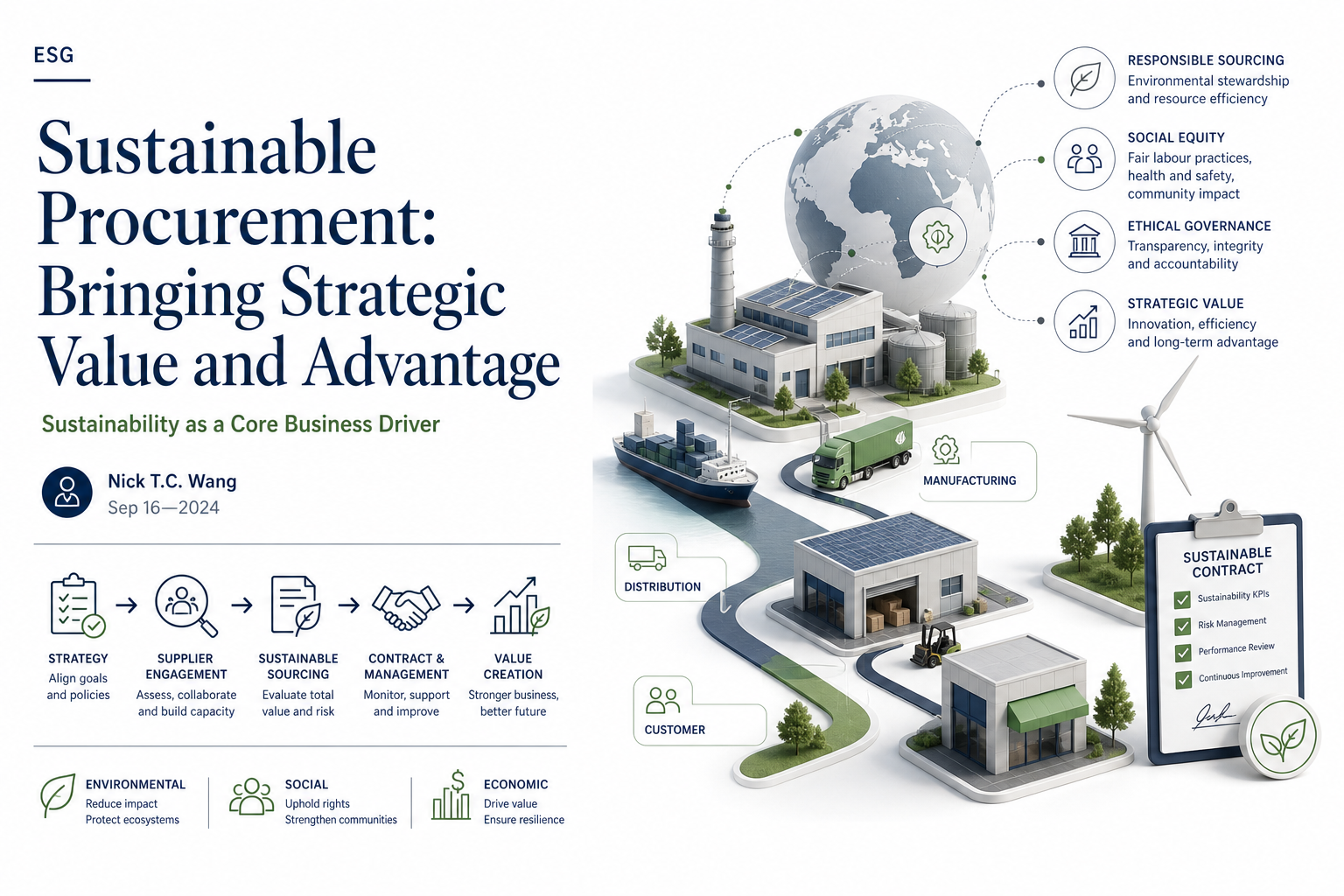
Sustainable Procurement: Bringing Strategic Value and Advantage
In today’s evolving business landscape, sustainability has become a core competency, not a luxury. Sustainable procurement is no longer a niche initiative—it’s a strategic imperative. From lifecycle thinking to supplier partnerships, it builds resilience, drives innovation, and positions companies for long-term advantages.
-
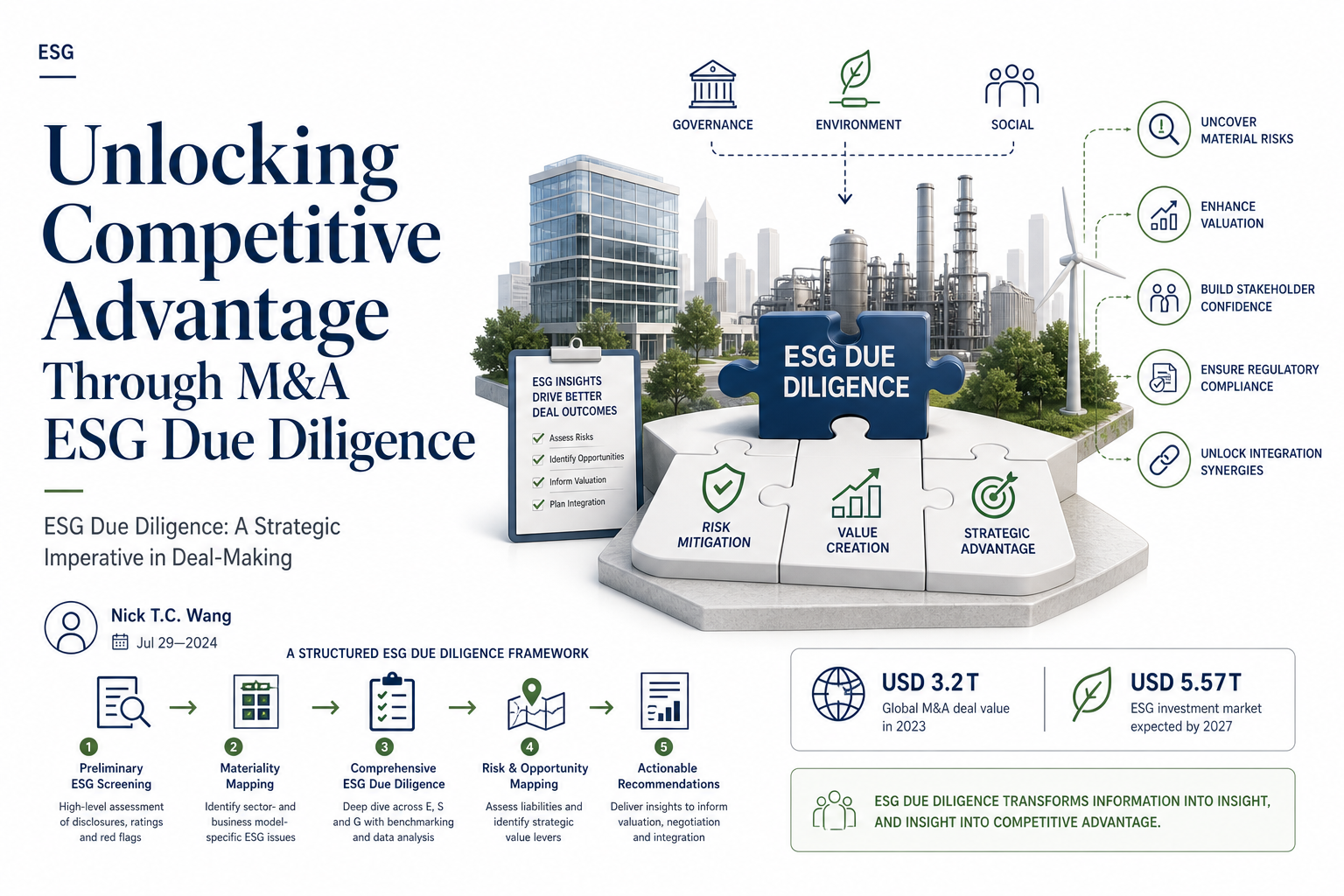
Unlocking Competitive Advantage Through M&A ESG Due Diligence
ESG due diligence has evolved from a compliance checkbox to a strategic imperative. For M&A leaders, it presents a critical lever to manage risk, uncover value, and future-proof acquisitions. This emerging discipline is reshaping transaction strategy in a sustainability-driven market.
-
Navigating the Saturated ESG SaaS Market with Integrity
As ESG SaaS platforms flood the market, overwhelmed buyers struggle to discern value. For startups to succeed, differentiation requires transparency, strategic partnerships, and genuine impact—not marketing noise. This article outlines practical strategies to cut through the ESG signal-to-noise problem.

-
How CSRD Is Reshaping Corporate Sustainability in 2024
As the EU’s CSRD takes effect, sustainability enters a new phase—more data-driven, strategic, and auditable. From ESG controllers to claim scrutiny and budget shifts, 2024 marks a turning point for corporate sustainability leaders navigating compliance, investment, and credibility in a maturing regulatory landscape.

-
Eight Strategic Challenges that CSOs in Asia faced in 2023
From net-zero scepticism to the rising tide of greenwashing, 2023 tested Asia’s sustainability leaders across geopolitics, regulation, and boardroom priorities. This article highlights eight pressing ESG challenges that complicated CSOs’ mandates and reshaped corporate sustainability agendas.

-
In Defence of ESG: Reclaiming Its Role in Sustainable Capitalism
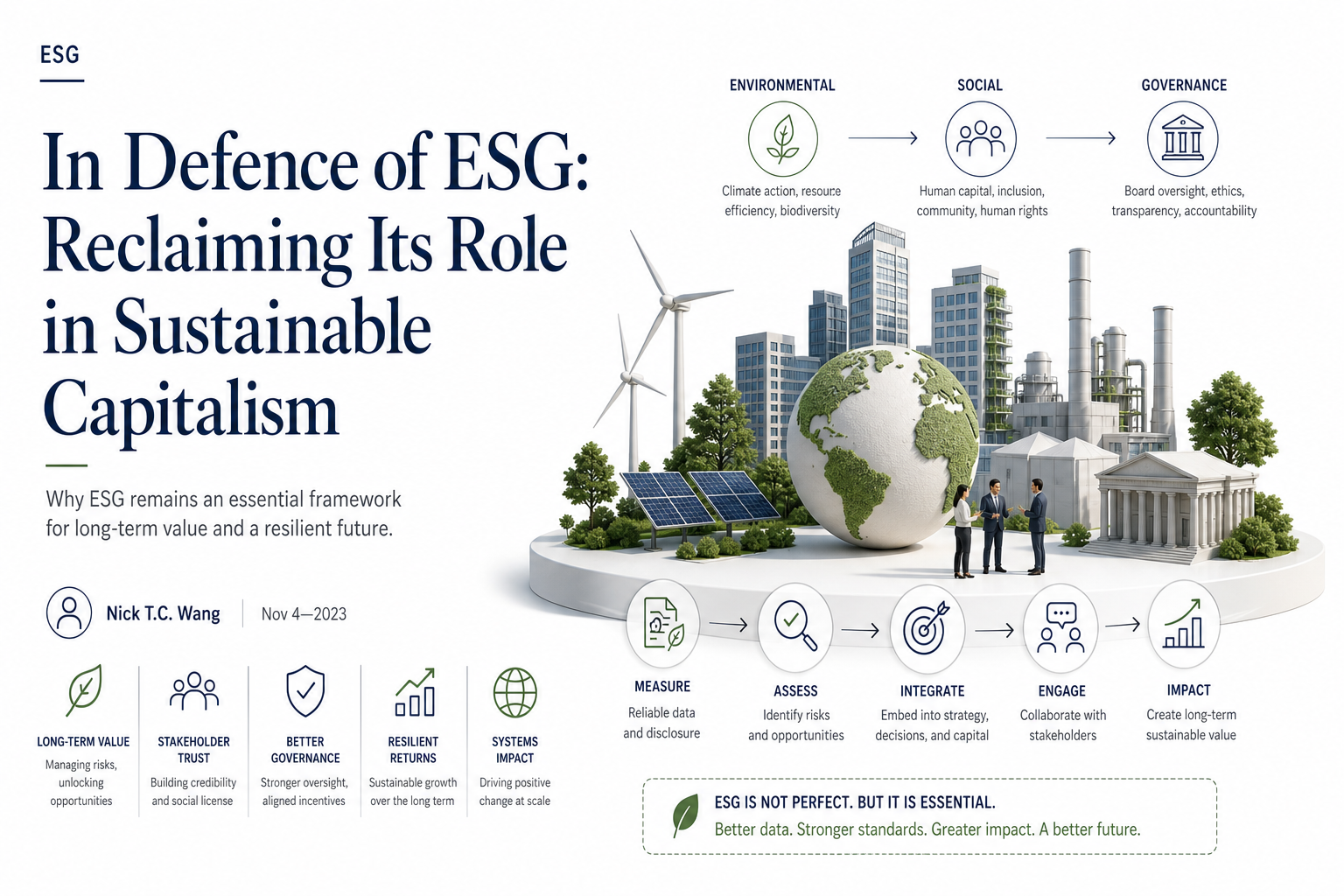
Despite growing scepticism, ESG remains a vital framework for aligning corporate behaviour with long-term societal value. While criticisms highlight valid concerns, dismantling ESG would be a mistake. Instead, we must refine its tools and ensure it evolves into a pragmatic, performance-driven force for ethical business.