This is a space for tracing how global sustainability decisions quietly shape the way we live, work, and move through the world.
Opinions are my own
Urban
-
Cityfront: Building Belonging and DEI in Urban Storefronts
Urban storefronts are civic stages where inclusion is either embodied or betrayed. Designing for belonging—through hiring, ownership models, and accessible architecture—turns retail space into social infrastructure that redistributes economic opportunity while strengthening communities locally.

-
Cityfront: Toronto’s Indie Retail – Community and Sustainability
Toronto’s indie retail enclaves prove that commerce can nurture neighbours and the planet at once. From Kensington’s refill stations to Parkdale’s repair benches, grassroots entrepreneurs weave circularity, culture and care into every transaction, building resilient streetscapes long before policy or capital markets do.

-
Cityfront: Preventing Greenwashing through Sustainable Retail Strategy
Consumers are tiring of vague eco-slogans and bamboo-font packaging. Retailers who still chase virtue by tagline risk lawsuits and lost trust. Real sustainability demands data, science-based targets, supplier diligence and transparent impact reporting that withstands all at every checkout.

-
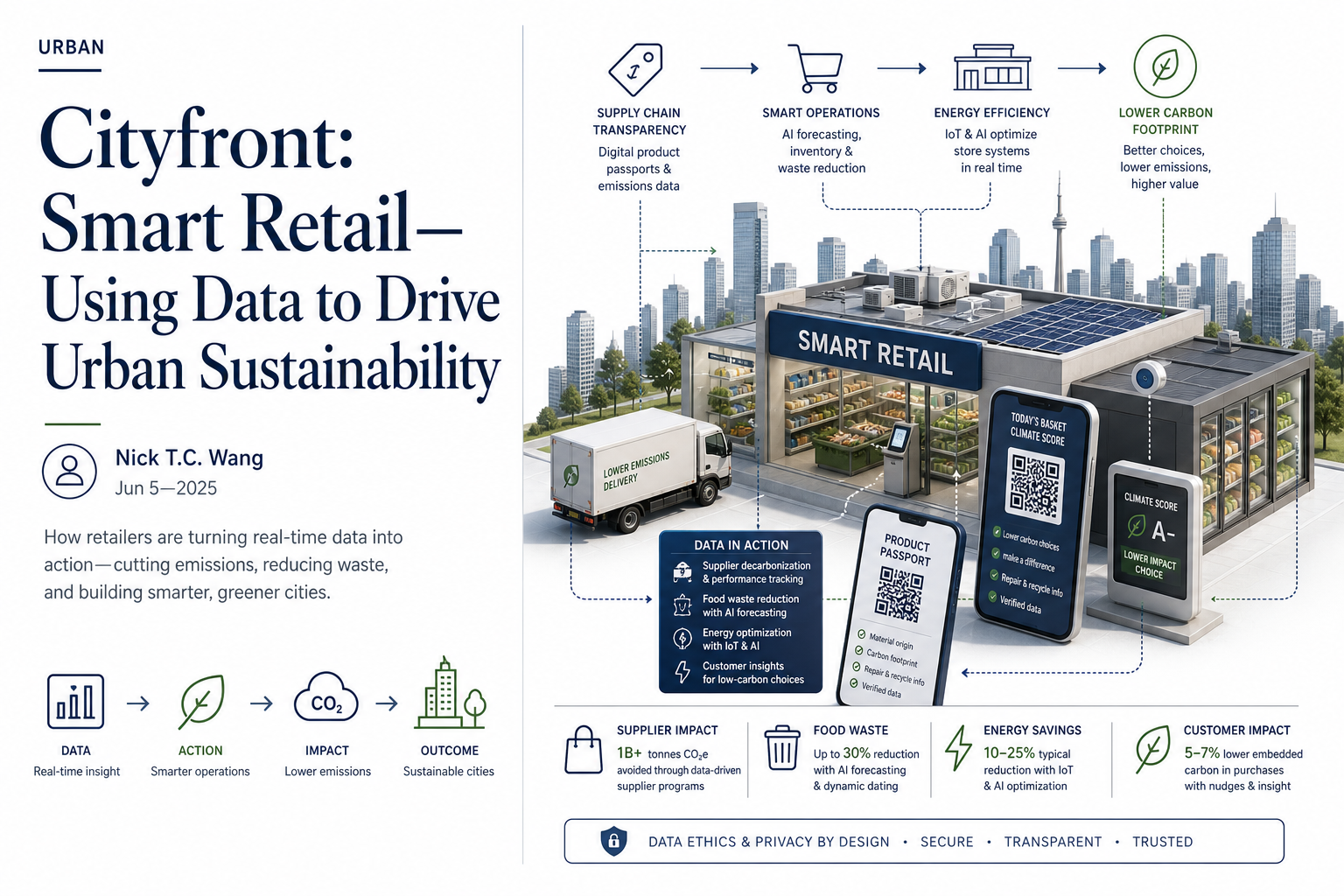
Cityfront: Smart Retail—Using Data to Drive Urban Sustainability
Behind every barcode lies a carbon story. When retailers fuse POS feeds with real-time supply-chain, inventory and building-performance data, shopping turns into a climate intervention. A handful of global pioneers show how algorithmic insight can cut waste, shrink emissions and fortify neighbourhood resilience.
-
Cityfront: Subscription, Rental and Repair in the Circular City
Modern urbanites no longer need to own drills, dresses or desks to enjoy them. By weaving subscription, rental and repair services into everyday life, cities like Toronto, Tokyo and Kobe are proving that circular models can shrink carbon footprints, unlock new revenue streams and strengthen community resilience.

-
Cityfront: Redrawing the Last Mile of Urban Delivery
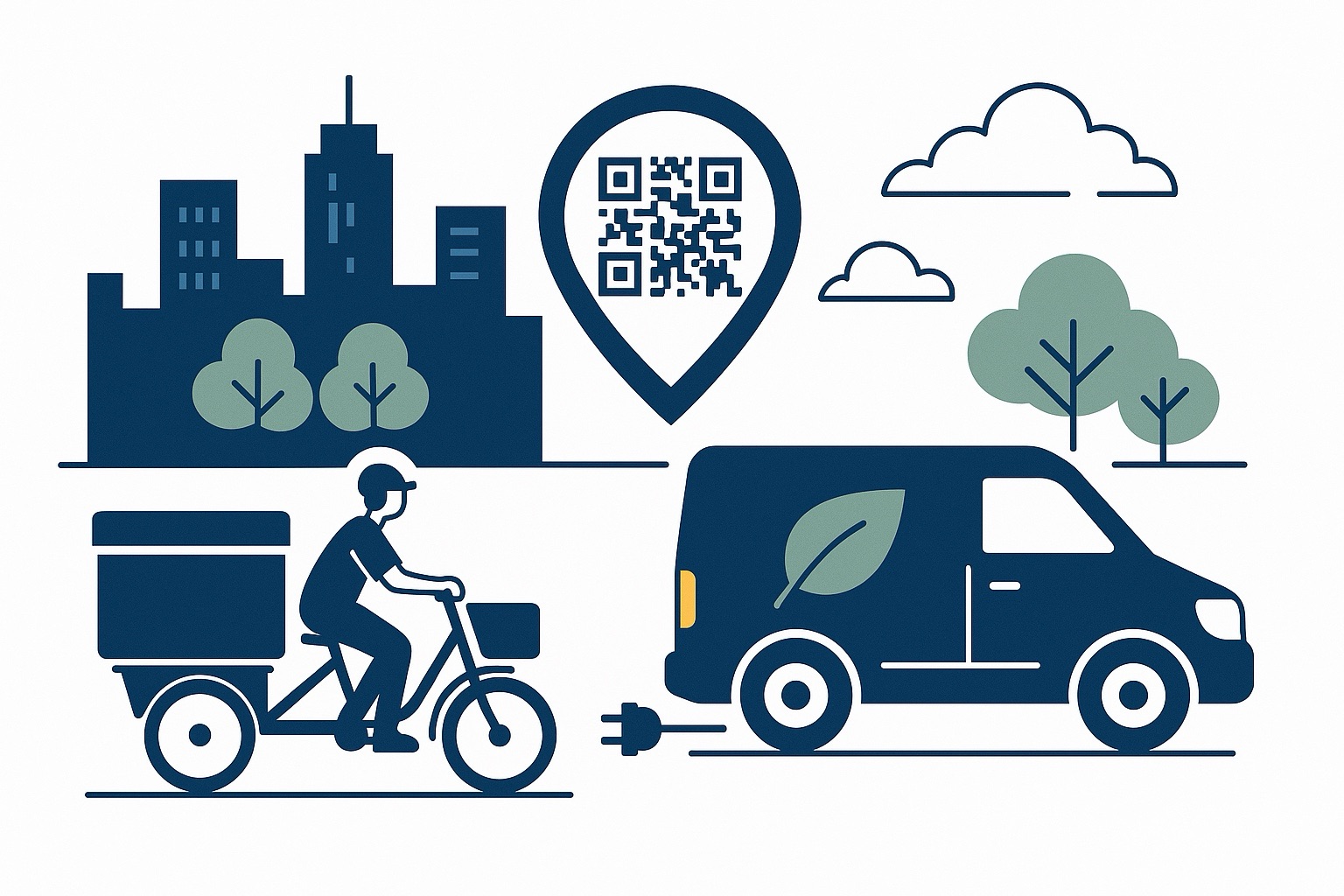
E-commerce has made courier vans as common as coffee shops, yet the carbon they trail is anything but benign. From Toronto’s e-cargo-bike hubs to Tokyo’s micro-depots tucked behind konbini, two cities are proving that the final kilometre can be zero-emission if stakeholders move in concert.
-
Cityfront: Micro-Miles, Macro Change of Localised Chains
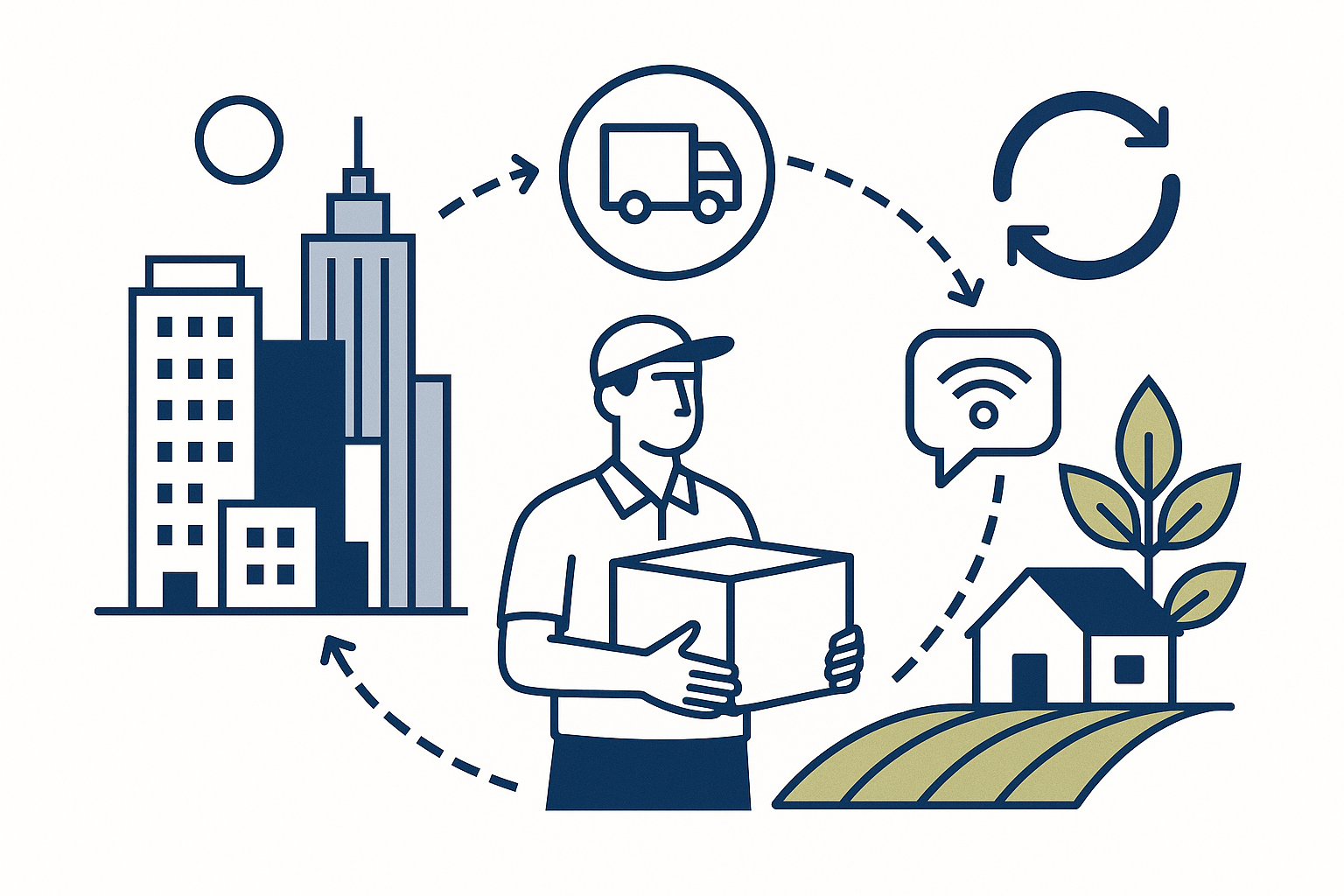
When a city shortens the distance between maker and market, the effects reverberate far beyond its skyline. By fusing circular design, neighbourhood logistics and data-rich transparency, urban supply chains can slash carbon, strengthen resilience and rewrite the rules of global trade—all within walking distance.
-
Cityfront: Retail as Catalysts of Regenerative Economies
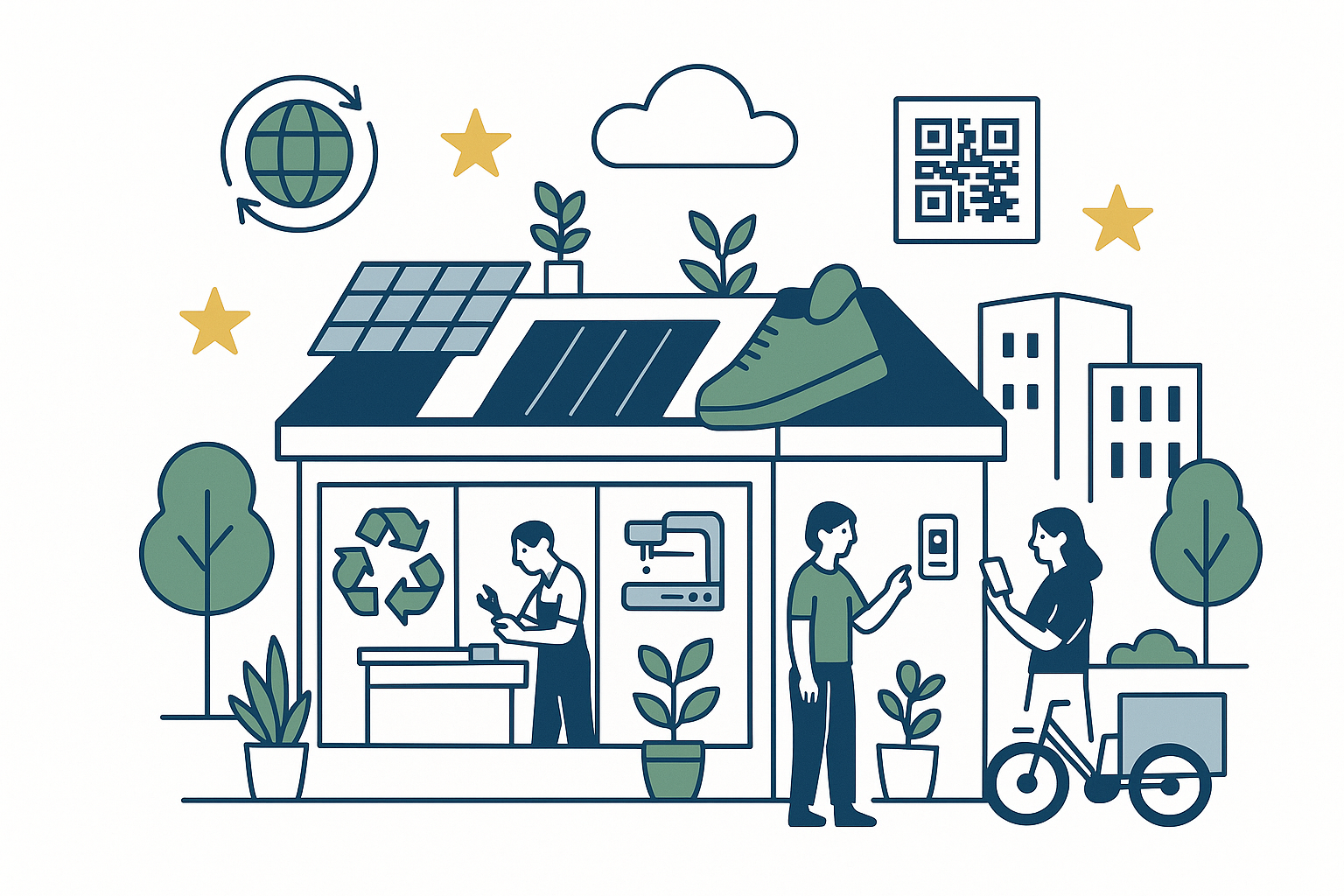
Retail is no longer a mere endpoint of consumption. In a circular city, storefronts become a node where resources loop, data flows transparently, and communities co-create value that replenishes ecosystems and neighbourhood prosperity in equal measure—offering a blueprint for regenerative urban commerce.
-
Cityfront: Beyond the Urban Sustainable Commerce
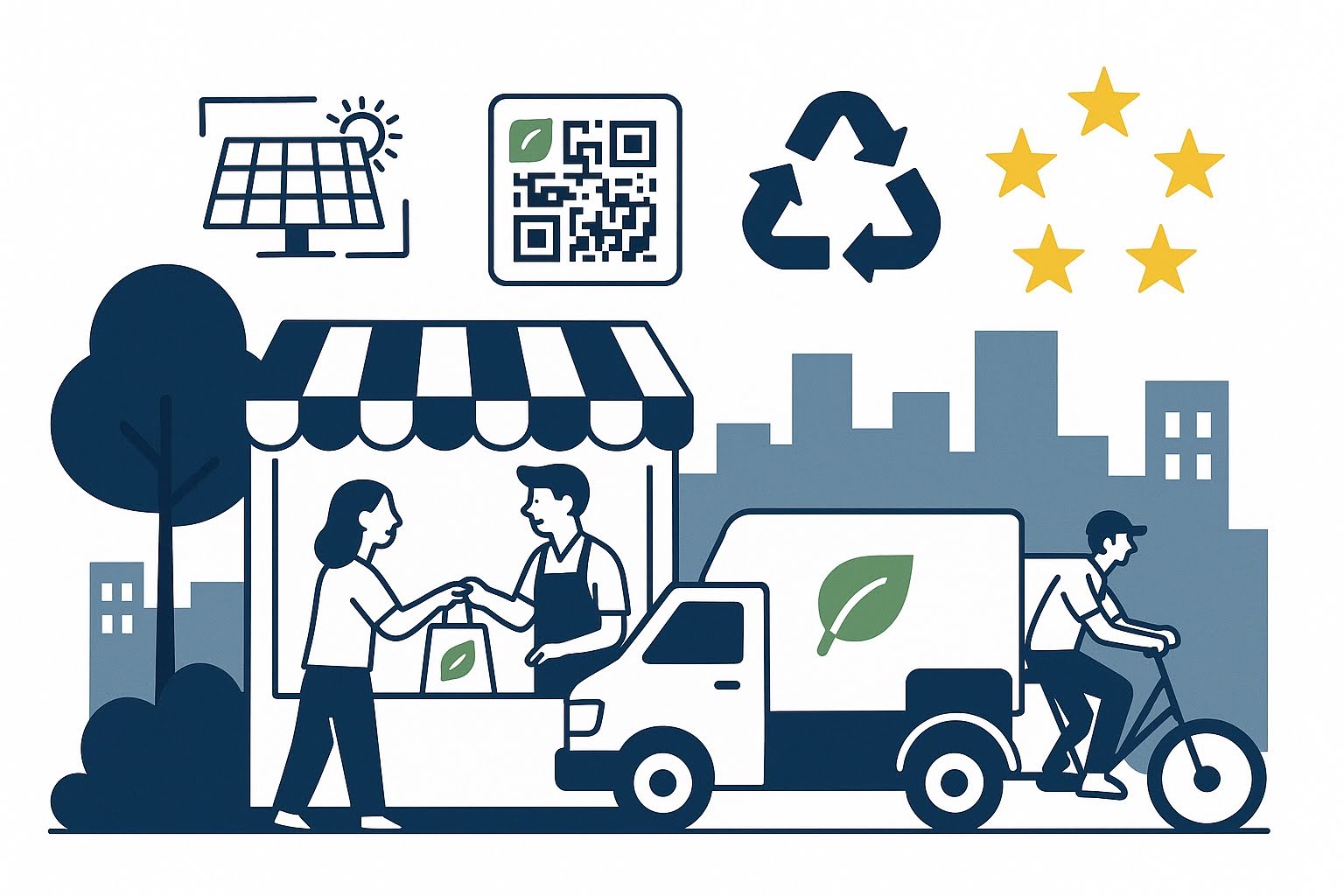
Cities have always been retail’s beating heart, but the climate crisis and shifting consumer values demand a reinvention. A sustainable commerce revolution can revitalise neighbourhoods if stakeholders embrace circularity, transparency, and community-centric design from day one forward.
-
Rethinking Downtowns: Post-COVID Urban Recovery in Canada
Canadian downtowns are entering a period of change. As hybrid work reshapes office demand and retail shifts toward experiential formats, planners must embrace diversified urban ecosystems. Through post-pandemic risks, opportunities, and the future of city cores through the lens of economic resilience and design.

-
COVID-19, Commercial Evictions, and the Unequal Urban Reality
COVID-19 exposed a longstanding imbalance between landlords and small business tenants. In Toronto and across Canada, commercial evictions revealed how structural power disparities, not just the virus, but the legal, economic, and ethical failures led to a fractured commercial leasing system.

-
Rethinking Urban Planning: Mobility, Affordability, and Market
Drawing on urban economics, Alain Bertaud challenges conventional planning in Order Without Design, advocating for cities shaped by labour market efficiency, not static regulation. As well as drawing relevance to today’s sprawling metropolises—and questions whether market-driven solutions are truly enough.

-
Reimagining the Post-Pandemic City: Urban Reset and Resilience
The pandemic didn’t end the city; it accelerated its reinvention. From hybrid work to sustainable retail and urban green spaces, the future of cities lies in redesigning for equity, resilience, and purpose—not retreat. Here’s a personal vision for the urban transformation and resilience ahead.