

This is a space for tracing how global sustainability decisions quietly shape the way we live, work, and move through the world.
Opinions are my own
Policy
-
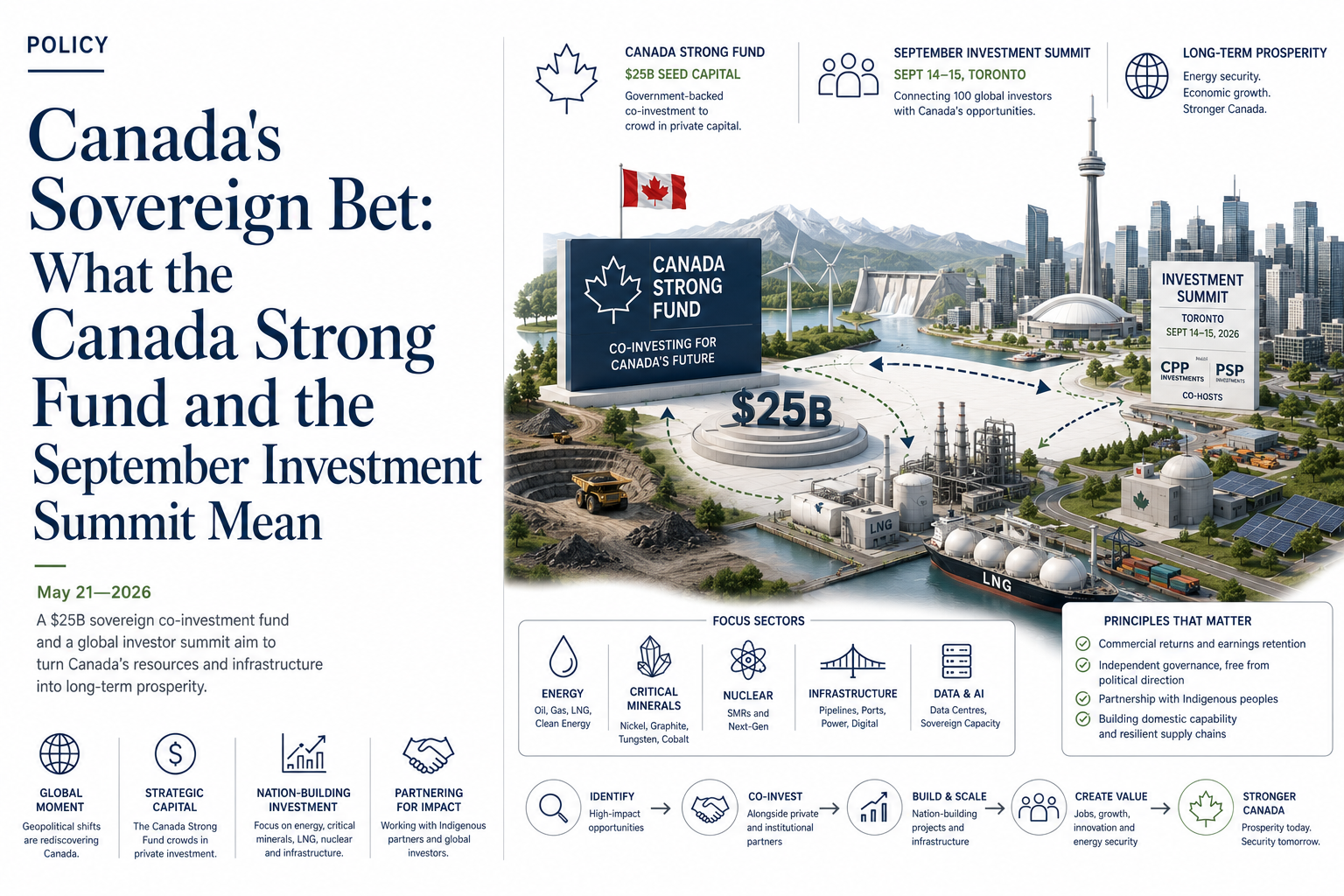
What the Canada Strong Fund and the September Investment Mean
Prime Minister Mark Carney’s Canada Strong Fund could become a transformative energy security institution or another underpowered federal investment vehicle. Its success will depend on governance independence and whether Canada can convert its energy, critical minerals, and infrastructure advantages into durable long-term economic power.
-
The Next Industrialisation Window is Batteries, Not Just Quantum
Canadian upstream minerals, Taiwanese downstream manufacturing, and a Chinese-dominated midstream describe the battery value chain more precisely than most other sectors. The strategic question is not whether Canada and Taiwan should co-operate on batteries, but on which batteries. The current generation is the wrong target.

-
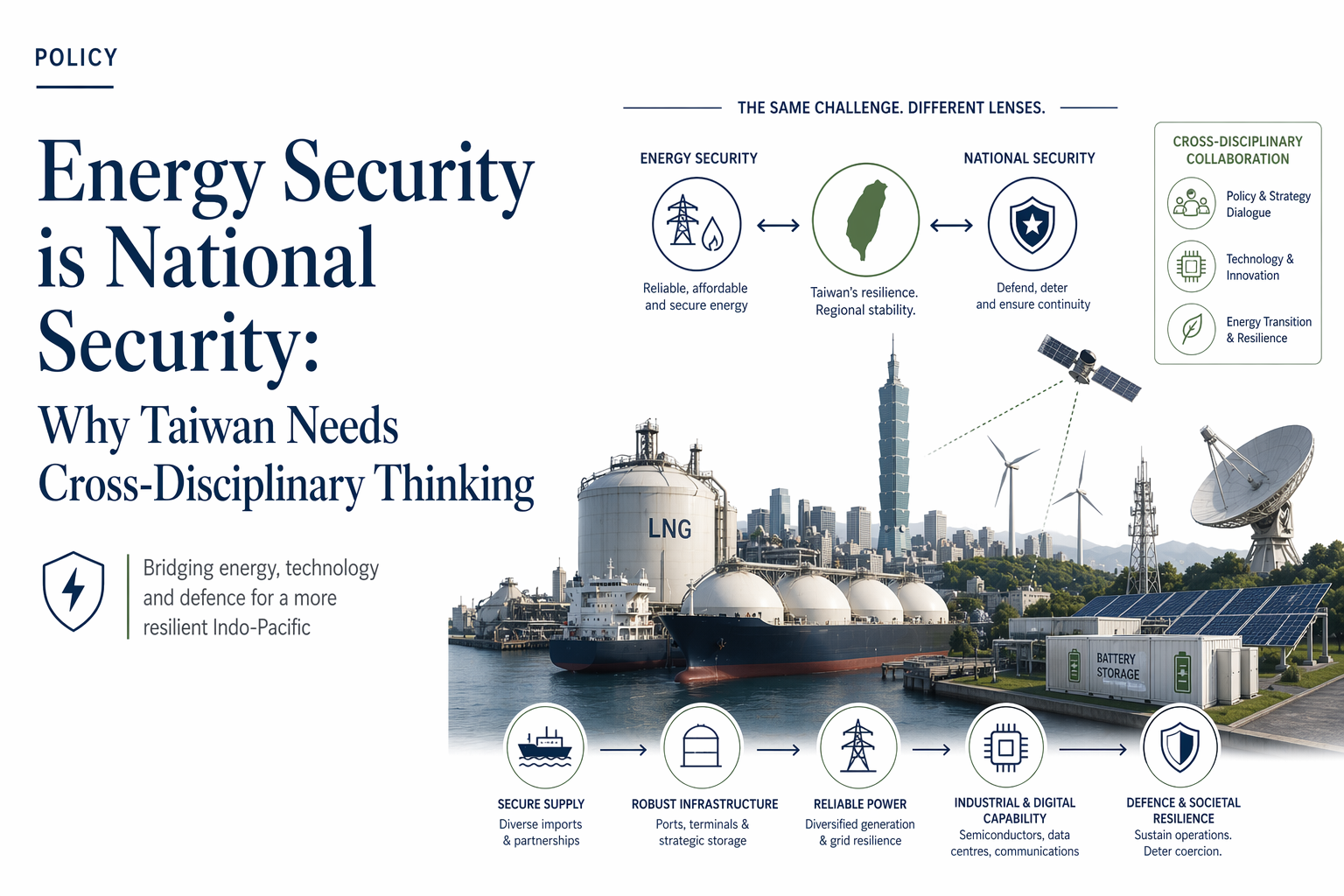
Energy Security is National Security: Why Taiwan Needs Cross-Disciplinary Thinking
A conversation with one of Canada’s leading defence strategists in Taipei revealed how deeply energy systems underpin national security. Taiwan’s 97% import dependence, 11-day LNG reserves, and post-nuclear vulnerability demand cross-disciplinary thinking that breaks the silos between energy, defence, and geo-economics.
-
Taiwan’s Energy Policy Turned Geopolitical Risk Into Industrial Risk and the Bill Just Arrived
Taiwan’s power system sits at the intersection of global commodity markets and geopolitical risk. The 2026 Middle East energy shock exposes the structural fragility of a system heavily dependent on imported fossil fuels – raising difficult questions about energy security, and the urgency of accelerating the island’s energy transition.

-
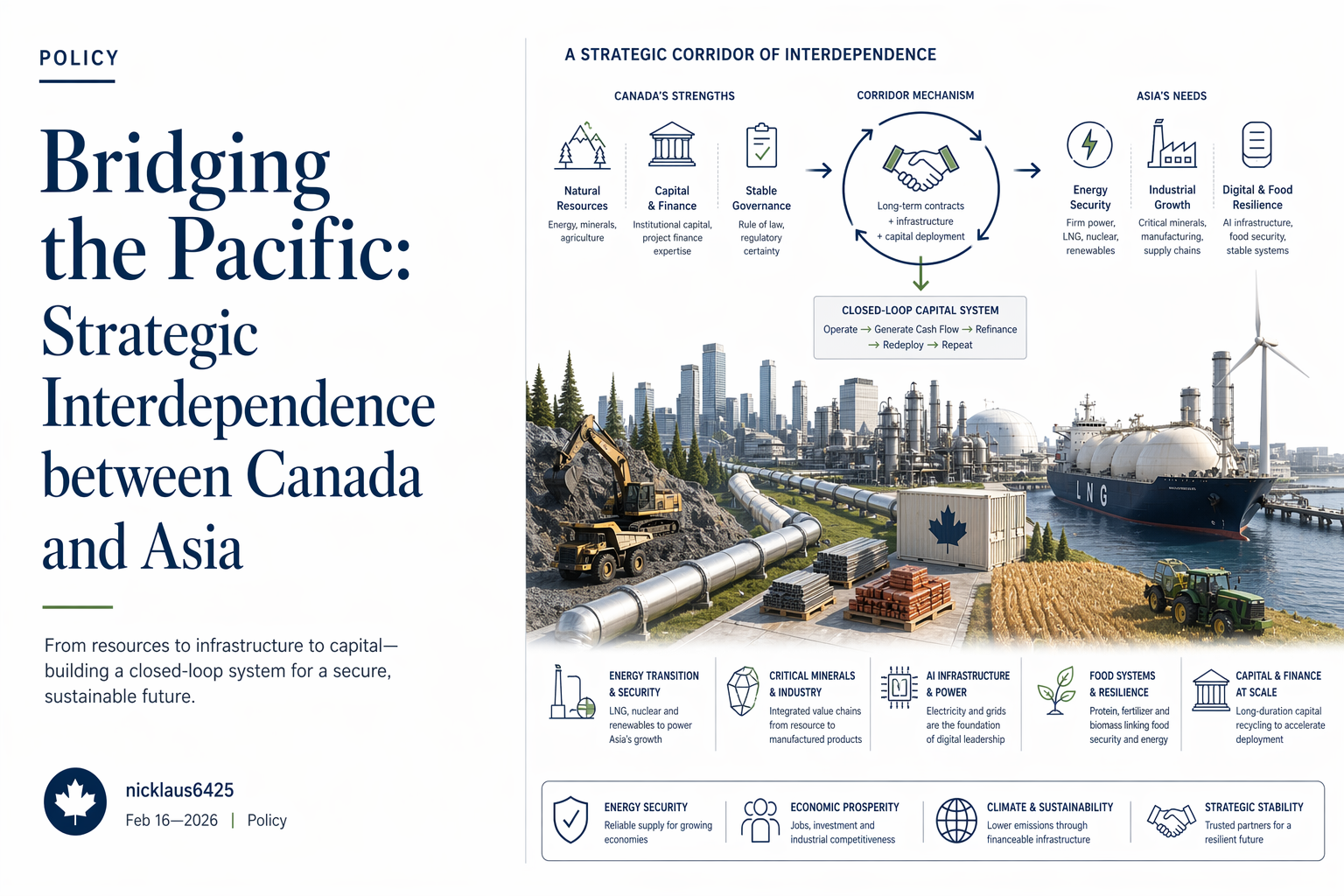
Bridging the Pacific: Strategic Interdependence between Canada and Asia
At the Canada-in-Asia Conference, the dominant signal was convergence: energy, minerals, and AI infrastructure discussed as an investable architecture. What is emerging between Canada and Asia is not a trade corridor but a capital platform built on bankable pipelines and long-term contracts.
-
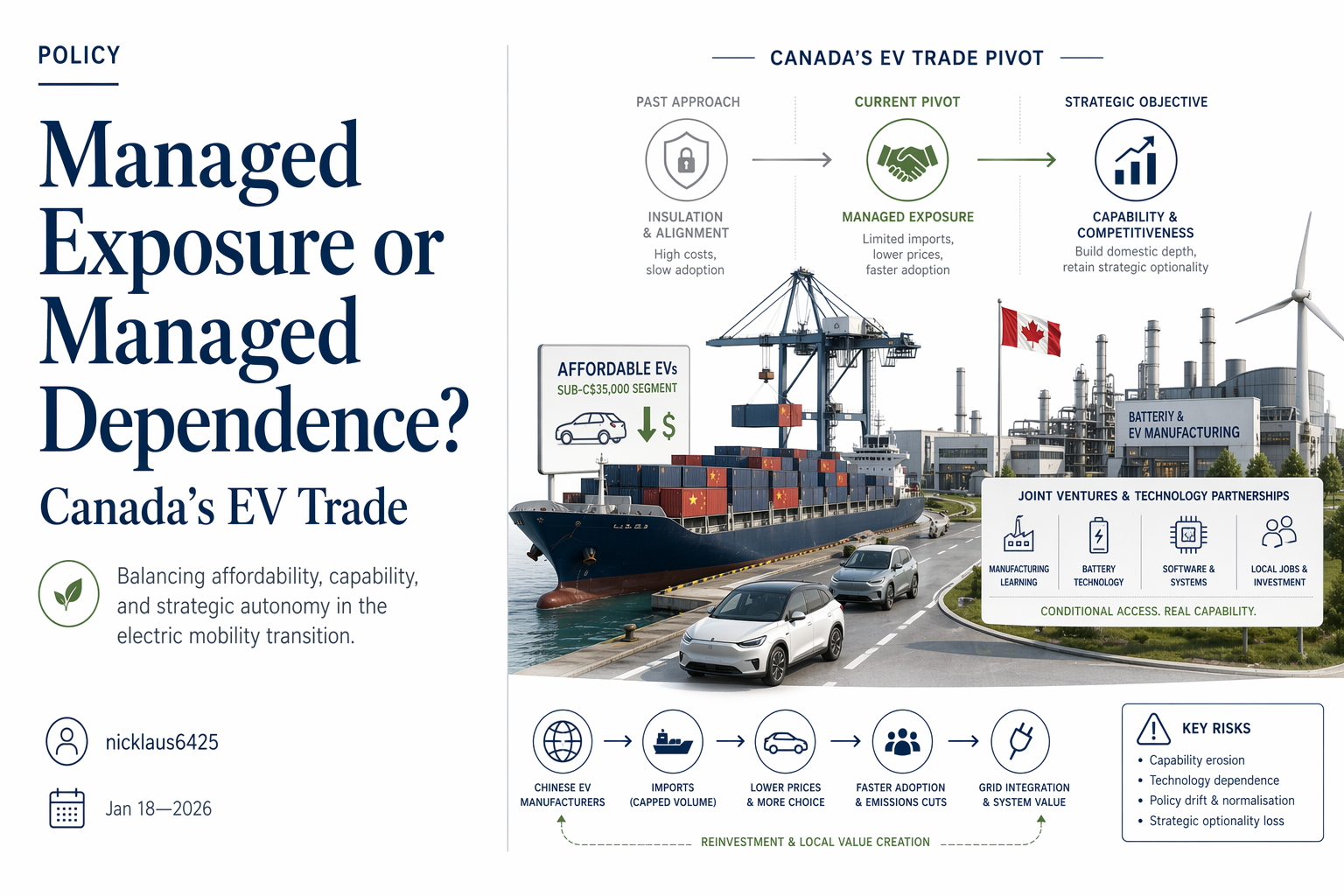
Managed Exposure or Managed Dependence? Canada’s EV Trade
Canada’s pivot on Chinese EV under Prime Minister Mark Carney reflects pragmatic response to affordability pressures and US industrial asymmetry. While affordability improves in the short term, unresolved risks around supply-chain resilience and long-term competitiveness raise questions about whether Canada is buying time or quietly spending it.
-
Policy Analysis: Carney Dropping Canada’s Consumer Carbon Tax
Prime Minister Mark Carney repealed the federal consumer carbon tax, signaling a new era in Canada’s climate policy. While designed to relieve household costs and neutralize political opposition, the move leaves a vacuum in Canada’s emissions strategy—one that must be filled to maintain global credibility and climate progress.

-
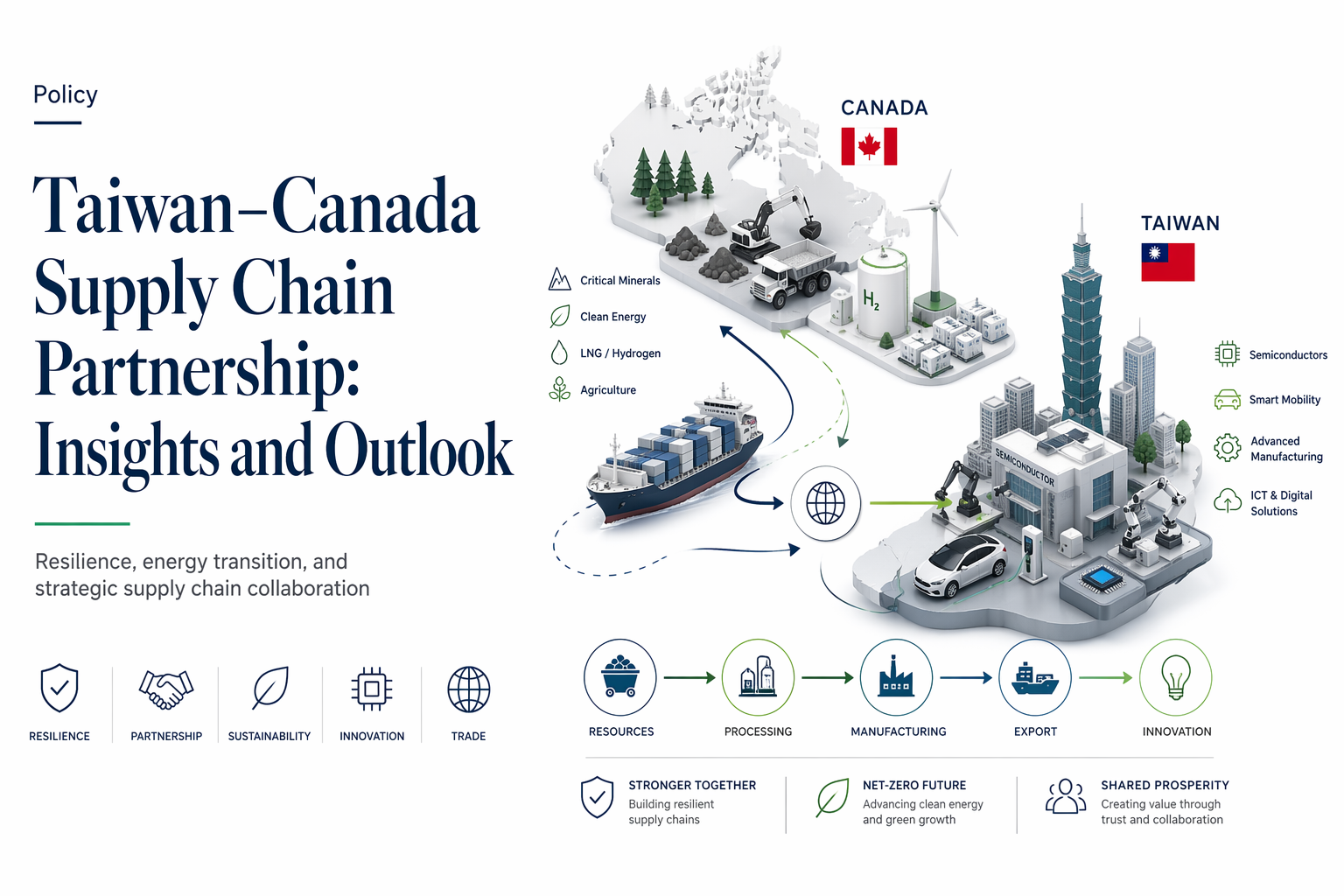
Taiwan–Canada Supply Chain Partnership: Insights and Outlook
Taiwan and Canada are deepening economic ties through supply chain resilience and sustainability. From clean energy to cultural innovation, this report reflects on bilateral strengths, collaborative potential, and strategic directions emerging from the 2024 Taiwan–Canada Supply Chain Networking Reception held in Taipei.
-
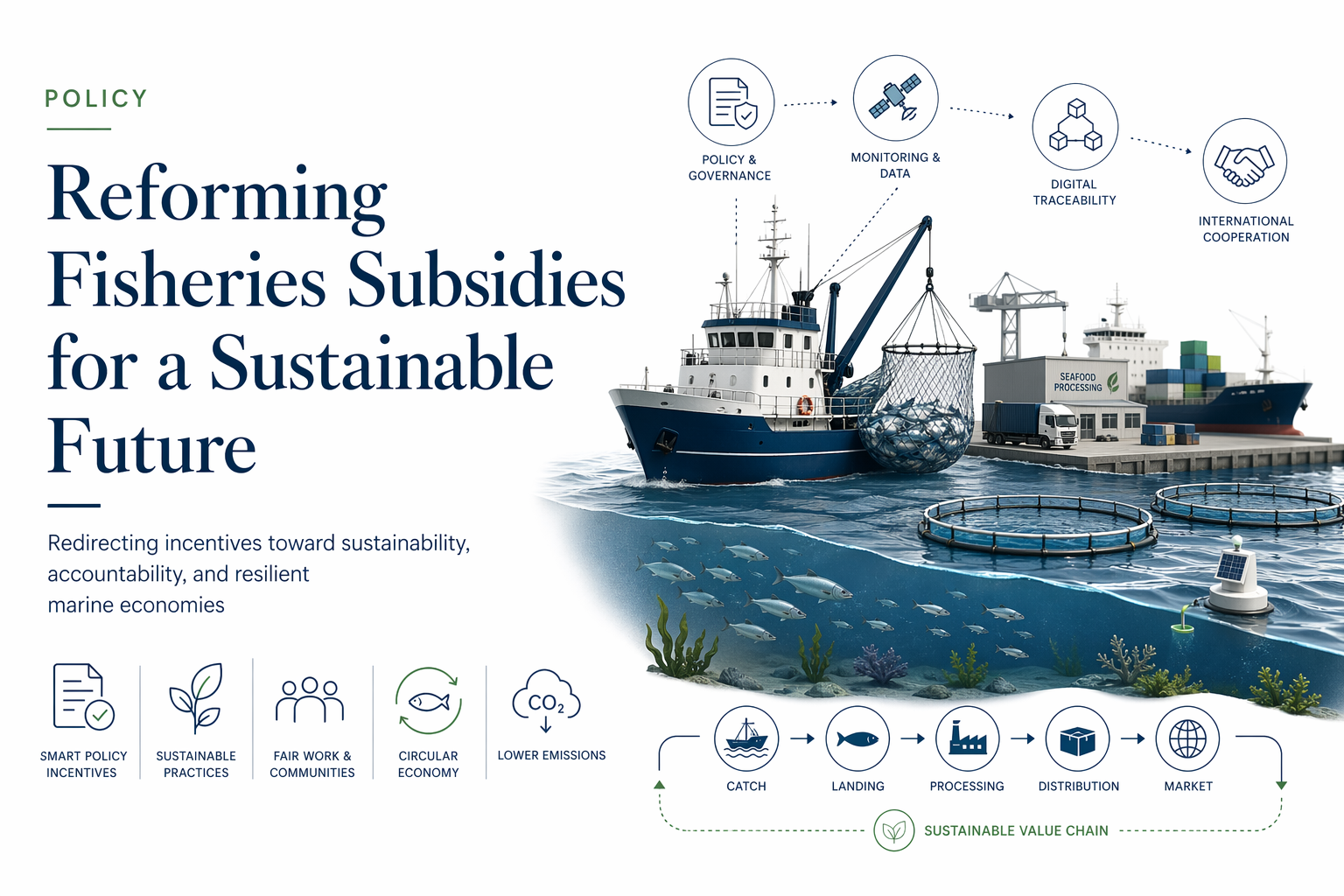
Reforming Fisheries Subsidies for a Sustainable Future
As global fisheries face mounting pressures, governments must reform subsidies to support responsible practices, low-carbon innovation, and ocean-based circular economies. This article explores how strategic funding can transform the fishing industry for long-term sustainability, food security, and inclusive growth.
-
Canada’s S-211 Act: A Strategic Shift Toward Ethical Supply Chains
Canada’s S-211 Act introduces mandatory reporting to combat forced and child labour in supply chains. By aligning trade policy with corporate accountability, the legislation marks a pivotal step in embedding social responsibility into commercial operations. Businesses must demonstrate efforts to ensure ethical sourcing.
