
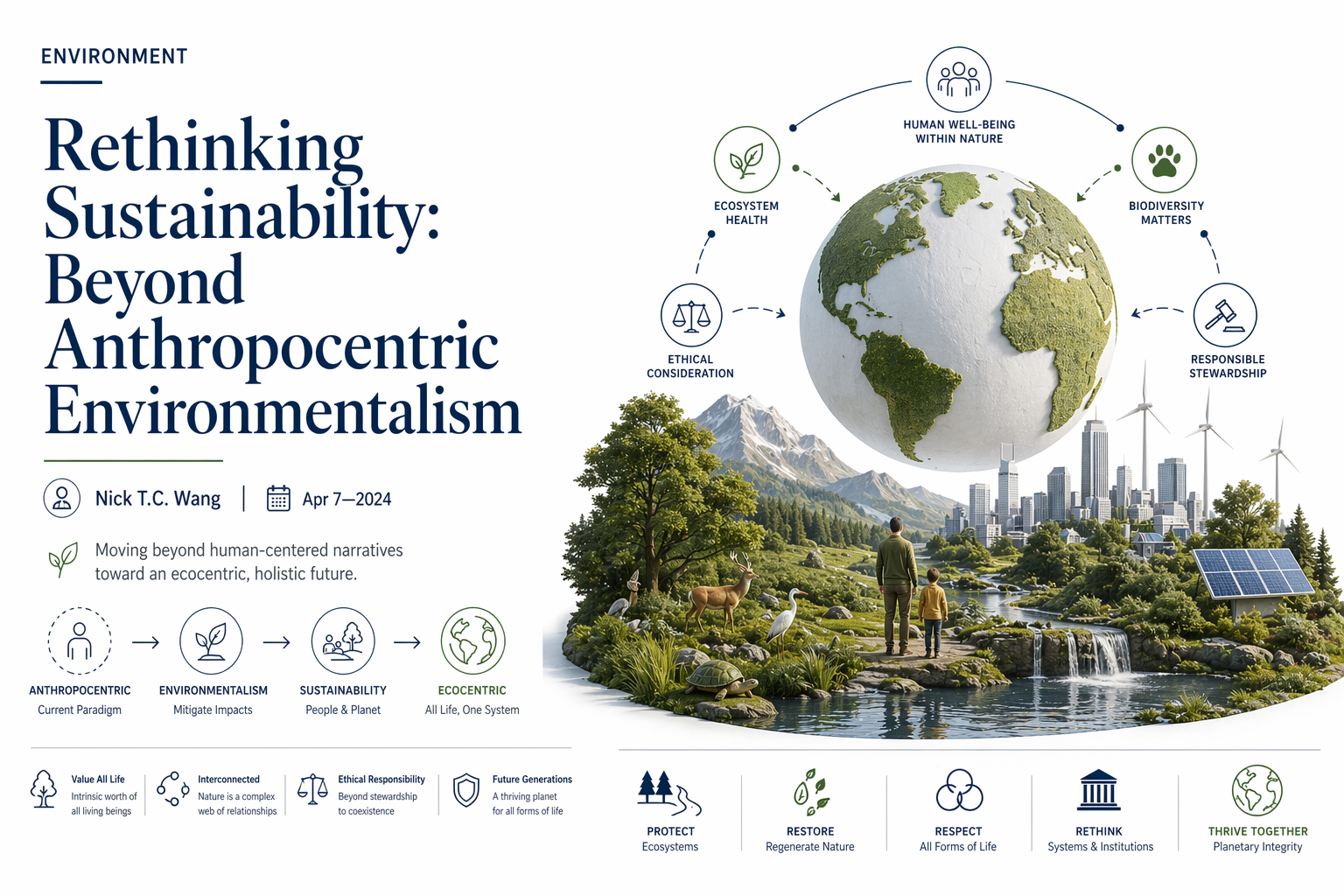
In recent years, environmental urgency has become a global rallying cry. From climate change to biodiversity loss, the threats we face are undeniable. Governments, corporations, and citizens alike have mobilised to reduce pollution, protect ecosystems, and steward natural resources. Yet in a recent conversation with a friend, a realisation struck me: environmental protection, while vital, is not sufficient for achieving true sustainability. Moreover, the prevailing sustainability narrative remains deeply anthropocentric, often overlooking broader ecological and ethical considerations.
The Limits of Environmentalism
Environmental initiatives tend to focus on mitigating the negative impacts of human activities on nature—reducing carbon emissions, cleaning up polluted waters, protecting endangered species. While necessary, such efforts rarely address the systemic causes of environmental degradation. For instance, renewable energy technologies reduce greenhouse gas emissions, but they also require significant land use, mineral extraction, and disruption of ecosystems. Similarly, conservation projects targeting specific species or habitats can unintentionally disturb delicate ecological interdependencies.
This approach reveals a recurring flaw: environmentalism, as practiced today, often treats nature as a passive backdrop for human activity, rather than a complex, interdependent system in which humans are one of many actors.
Sustainability’s Anthropocentric Bias
Sustainability, widely hailed as the endgame of environmentalism, is fundamentally anthropocentric. Its most cited definition—meeting present needs without compromising the ability of future generations to meet their own—was formalised in the Brundtland Report of 1987. While intergenerational fairness is commendable, the framing remains human-centric. It prioritises human prosperity, often at the expense of non-human species and ecosystems.
This bias is evident in how sustainability indicators focus predominantly on economic growth, technological progress, and human development, while giving limited weight to the intrinsic value of non-human life or the long-term health of the biosphere.
From Anthropocentrism to Ecocentrism
At the heart of this discussion lies the question of perspective:
- Anthropocentrism places humans above other life forms, assigning them greater intrinsic value.
- Biocentrism asserts that all living organisms possess equal moral worth.
- Ecocentrism recognises the value of entire ecosystems, rejecting the idea of human superiority.
To advance sustainability meaningfully, we must embrace an ecocentric worldview—one that respects the interconnectedness and intrinsic worth of all life.
TNFD and the Incomplete Shift
Initiatives such as the Taskforce on Nature-related Financial Disclosures (TNFD) and the Natural Capital Protocol are steps in the right direction. They aim to integrate biodiversity and ecosystem value into financial and operational decision-making. However, they fall short of fully escaping the anthropocentric frame. By translating nature into monetisable capital, they risk commodifying what should be seen as inherently invaluable. While such frameworks help quantify nature’s contribution to economic systems, they rarely capture the ecological complexity or ethical imperatives that define a truly sustainable worldview.
Toward Holistic Sustainability
True sustainability demands more than environmental protection—it requires a systemic transformation in how we relate to nature. Holistic sustainability calls for an integrated approach that considers ecosystems, biodiversity, and future generations within a single ethical and operational framework. It means reimagining our economies, consumption patterns, and societal structures to align with ecological principles such as resilience, regeneration, and diversity.
It also implies recognising the legal and moral rights of non-human entities, as seen in emerging movements that seek to grant legal personhood to rivers, forests, and ecosystems. These shifts go beyond stewardship—they affirm that nature is not merely a resource, but a co-equal stakeholder.
Conclusion: Toward a Balanced Future
While environmentalism remains a foundational pillar of sustainability, it cannot stand alone. Recognising the anthropocentric limitations of current sustainability frameworks is the first step toward a more inclusive and ecologically grounded paradigm.
To achieve a future in which both human and non-human life can thrive, we must expand our ethical horizons and adopt an ecocentric perspective—one that values all forms of life and seeks harmonious coexistence, not just human survival.
Only then can we truly claim to pursue a future built on justice, balance, and planetary integrity.
Leave a Reply